

Automation still matters—but the world around it has changed
Business process automation (BPA) software has earned its place at the heart of modern organisations. For decades, it has helped businesses standardise processes, automate repetitive tasks, reduce operational risk and improve efficiency. Whether processing invoices, onboarding employees or managing customer requests, BPA platforms have provided the structure that enables organisations to operate at scale.
None of that changes because AI has arrived. In fact, automation software remains one of the most valuable investments many organisations have made. The challenge faced today is simply that it was designed for a different world.
The world automation was built for
Traditional workflow platforms were created around a relatively predictable operating model; work entered a process, moved through a series of predefined stages and was completed by people or business systems according to clearly defined rules:
- If a task met certain criteria, it followed one path
- If it required approval, it moved to the appropriate person
- If information was missing, the process paused until the necessary data became available
The workflow itself remained largely fixed, even when automation became more sophisticated, the underlying principle stayed the same: define the process first, then automate its execution and for many years, that approach worked exceptionally well.
AI changes the nature of work
Artificial intelligence introduces something fundamentally different; rather than simply automating individual tasks, AI can actively participate in the work itself.
An AI agent might analyse a contract before it reaches a legal team. Another might summarise a customer case, retrieve supporting information from multiple systems or recommend the next best action. A third may prepare documentation, identify risks or collaborate with a human colleague before handing work back for approval.
And these aren't simply automated tasks, they're intelligent participants contributing to the outcome.
As organisations introduce more AI agents, work becomes less linear and more collaborative. Decisions are made dynamically, information is generated continuously and different participants contribute according to context rather than following a single predetermined route. The process hasn’t disappeared, but has instead become far more fluid.
Automation manages processes. AI creates interactions.
When it comes to implementing AI, lots of organisations begin to encounter friction as they realise that automation software is excellent at moving work through predefined stages, but is far less suited to coordinating a growing ecosystem of people, systems and AI agents that may all contribute at different moments and in different ways. The question is no longer “What happens next?”.
Instead, organisations begin asking:
- Which participant is best placed to complete this activity?
- Should an AI agent perform this task or should it remain with a person?
- What level of confidence does the AI have?
- When should human oversight be introduced?
- How do we maintain visibility across every decision?
- How do we govern interactions between people, systems and AI?
These questions sit above the automated workflow itself; they're questions about orchestration.
This isn't the end of automated workflows
It’s important to be clear about one thing, and that is that Agentic Work Management doesn’t replace workflow software, it builds upon it.
Organisations don’t need to discard the systems they’ve invested in or redesign every business process from the ground up, as existing automated processes continue to provide structure, compliance and operational consistency.
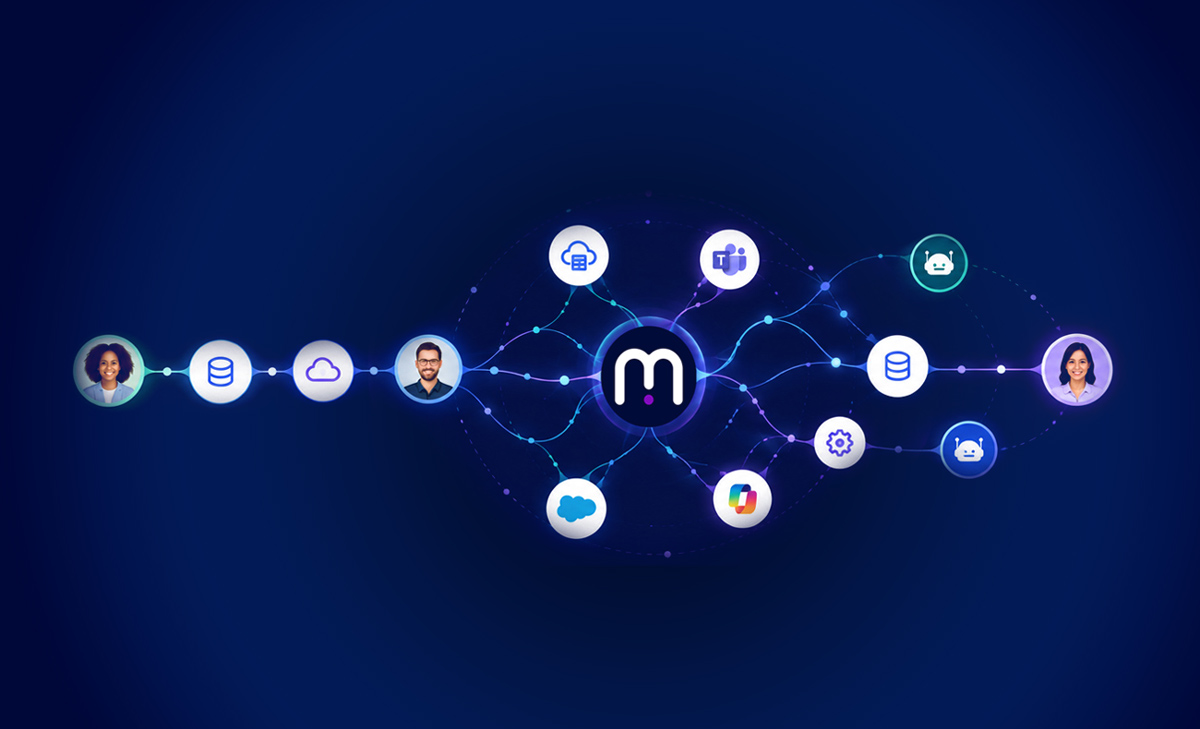
What changes is the layer above them. As AI becomes another participant in organisational work, businesses need a way to coordinate interactions across workflows, business applications and intelligent agents while maintaining governance, visibility and accountability. In other words, they need an operating model designed for the way that work happens today.
From automation to orchestration
For years, organisations have focused on automating work and the next challenge is orchestrating it.
Automation asks whether a task can be completed more efficiently, while orchestration asks who, or what, is best placed to complete it. Sometimes the answer will be a person, sometimes it will be an existing business system and, increasingly, it may be an AI agent.
The role of the organisation is no longer to just automate the process, it’s to ensure every participant works together effectively, transparently and safely.
The next evolution of work management
Every generation of technology changes the way organisations operate:
- Cloud computing changed where software lives
- Mobile technology changed where people work
- Artificial intelligence is changing who, and what, participates in work
That’s why automation software, despite everything it continues to do well, wasn’t built for the AI era – it solved the challenge of a previous generation.
The organisations that thrive over the coming decade won’t abandon automation, they’ll build on it, combining the strengths of existing processes with a new layer of orchestration that brings together people, systems and AI agents within a single operational framework.
That's the shift from business process management to Agentic Work Management - and it's the future M. has been built to enable.